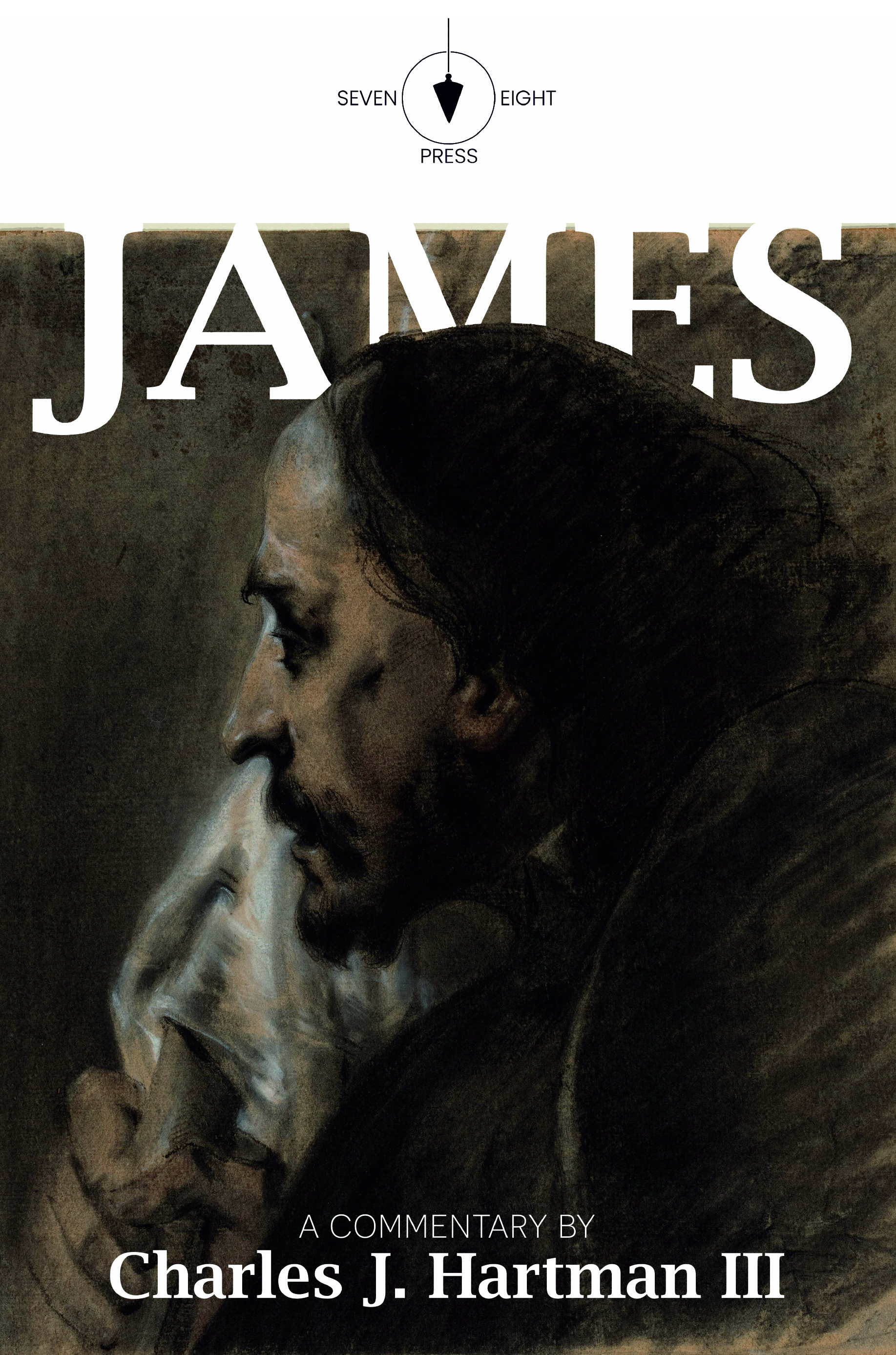
James
A Commentary
290 pages / Copyright 2026
James
A Commentary
290 pages / Copyright 2026
Product details
- Hardback
- 979-8-9954805-1-8
- Paperback
- 979-8-9954805-0-1
But He gives more grace. (James 4:6)
Are believers justified by faith alone, or by faith and works together?
Does the New Testament present two conflicting answers? “A man is justified by faith apart from the deeds of the law,” says Paul. Yet in the Epistle of James, we read, “Faith by itself, if it does not have works, is dead…. A man is justified by works, and not by faith only.”
James has presented a problem for many through the centuries – including the great German Reformer Martin Luther, who wondered whether its teachings contradicted Paul’s. But far from undermining the doctrine of salvation by grace through faith, James’ instructions for the life of the Church lead believers back again and again to the promises of God fulfilled in Jesus Christ and to His sustaining grace in the midst of continuing trials and temptations.
This book explores how James follows in the tradition of Jewish Wisdom Literature to encourage believers, then and now, to live that life of faith under pressure. With clear-eyed realism he describes the highs and lows, the weaknesses and challenges every Christian faces in this world: trials and tribulations; prosperity and poverty; temptations to anger and the perils of the uncontrolled tongue. Through a stark series of “two paths” couplets, James points us toward the godly way of righteousness and wisdom and warns against the way of unrighteousness and folly. Most of all, he urges us to take God’s “royal law” as the framework for our lives: You shall love your neighbor as yourself.
Table of Contents
(15 entries)
- Introduction: An Epistle of Straw
- Chapter 1 Which James?
- Focus Scripture: James 1:1; Acts 15:1-29; Galatians 2:1-13
- Chapter 2 To the Twelve Tribes of the Diaspora
- Focus Scripture: James 1:1; Acts 8:1-4
- Chapter 3 Wisdom in Tribulation
- Focus Scripture: James 1:2-8, 12-15
- Chapter 4 Brave Patience
- Focus Scripture: James 4:5-6, 7-10; 5:7-11
- Chapter 5 Worldliness vs. True Religion
- Focus Scripture: James 1:5-11, 16-27
- Chapter 6 Friendship or Enmity?
- Focus Scripture: James 4:1-4
- Chapter 7 Anger Management
- Focus Scripture: James 1:19-20; 3:8-12; 4:11; 5:9
- Chapter 8 Wisdom From Above
- Focus Scripture: James 1:5; 3:13-18
- Chapter 9 For Richer, For Poorer
- Focus Scripture: James 1:9-11; 2:1-7
- Chapter 10 Homo Economicus
- Focus Scripture: James 4:13-16; 5:1-6
- Chapter 11 A World of Wickedness: The Tongue
- Focus Scripture: James 1:19-20, 26; 3:1-12; 4:11-12; 5:9, 12
- Chapter 12 The Royal Law
- Focus Scripture: James 1:22-25; 2:8-13; 5:19-20
- Chapter 13 Faith and Works
- Focus Scripture: James 2:14-26
- Chapter 14 The Two Paths Revisited
- Focus Scripture: James 4:17; 5:13-18, 19-20